Composting for Circularity and Climate Change
How composting fights climate change, plus the regulatory landscape shaping compostable product claims.
Also on LinkedIn
Composting for Circularity and Climate Change
Written by Claire Patterson
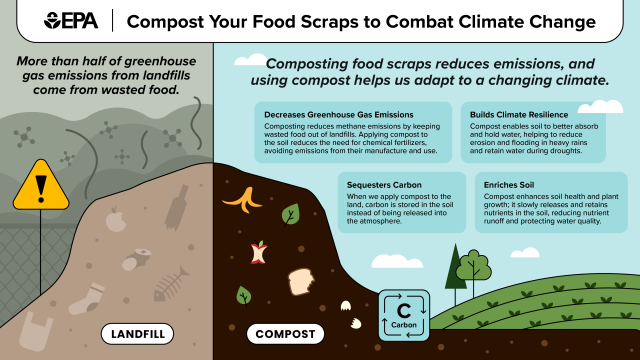
Archaeological evidence shows composting has been practiced since at least 5000 BC. Compost’s benefits extend beyond being used as an accessible fertilizer: it can be used to prevent soil erosion by binding the soil together, increasing filtration and slowing surface water.
Source
Canadian summers are often when the most extreme effects of climate change are felt: cyclic periods of drought and torrential rains mean the soil is often too dry to properly absorb stormwater, causing it to pool on the surface and lead to flooding or landslides. Compost acts as a sponge: retaining water during droughts and absorbing water during floods. Furthermore, compost sequesters carbon like a sponge, reducing methane emissions in landfills and effectively slowing the rate of progression of climate change.
In addition to its environmental advantages, composting plays a crucial role in modern society by promoting the reduction of food waste. By diverting organic waste from landfills and incinerators, composting extends landfill life. Upcycling organic matter into a productive product further reduces agricultural maintenance costs and strengthens the circular economy, setting the stage for understanding the complex legal landscape surrounding compostable materials.
Government Regulations & Definitions
Not all compostable products can be labelled biodegradable, as regulations often reserve this term. Some US states and European countries require that single-use items meet specific environmental conditions and timeframes before using biodegradable claims, because mislabeled items can contaminate compost facilities.
“Compostable” is used for materials that meet important ASTM test criteria and other similar standards. This term is more accurate when describing materials’ end-of-life behaviour. In Canada, being certified compostable can be achieved through third-party organizations such as the Biodegradable Products Institute (BPI) and EcoLogo program. The Bureau de normalisation du Québec (BNQ) is a provincial certification for products and packaging, validating against ISO 17088:2021 and ISO 18606:2013.
Following June 30 2027, the State of California will enforce “compostable” and “home compostable” as reserved terms strictly for items on the National List of Allowed and Prohibited Substances, published by the United States Department of Agriculture. Any products that fail to meet these requirements will have to revise their packaging to remove any implication of compostability. This legislation is currently being revised, as products containing synthetic substances that are otherwise lawfully compostable will have to remove their labelling and cannot market their products’ compostability.
As with any developing law, standards and requirements are dynamic, regularly changing and updating. Oligomaster can help build the research and development pathway to commercialize your material, ensuring compliance to different standards.
These laws are intended to help keep harmful chemicals out of the soil: the UK Advertising Standards Authority has recently banned adverts by two popular coffee companies that marketed their pods as “compostable,” without specifying they could only be done in an industrial setting.
As the regulatory landscape evolves, requirements are getting tighter, with growing concerns about unavoidable environmental contamination through compost and vermicompost used in organic crop production. Oligomaster can help navigate the political landscape and acceptability criteria to launch your product across North America, connecting regulatory insights to practical composting knowledge.
What and How to Compost
Generally, composting is the managed, aerobic biological decomposition of organic materials by microorganisms. Compost is the biologically stable product of this process.
Home composting is most common for household wastes, including food scraps and yard trimmings. Vermicomposting is an ideal at-home option for people in metropolitan areas who do not have access to a yard or a large designated community composting area. Industrial composting involves sending the waste to a secondary facility where items can be processed on a large-scale, high-heat environment, allowing for greater recuperation and faster degradation times.
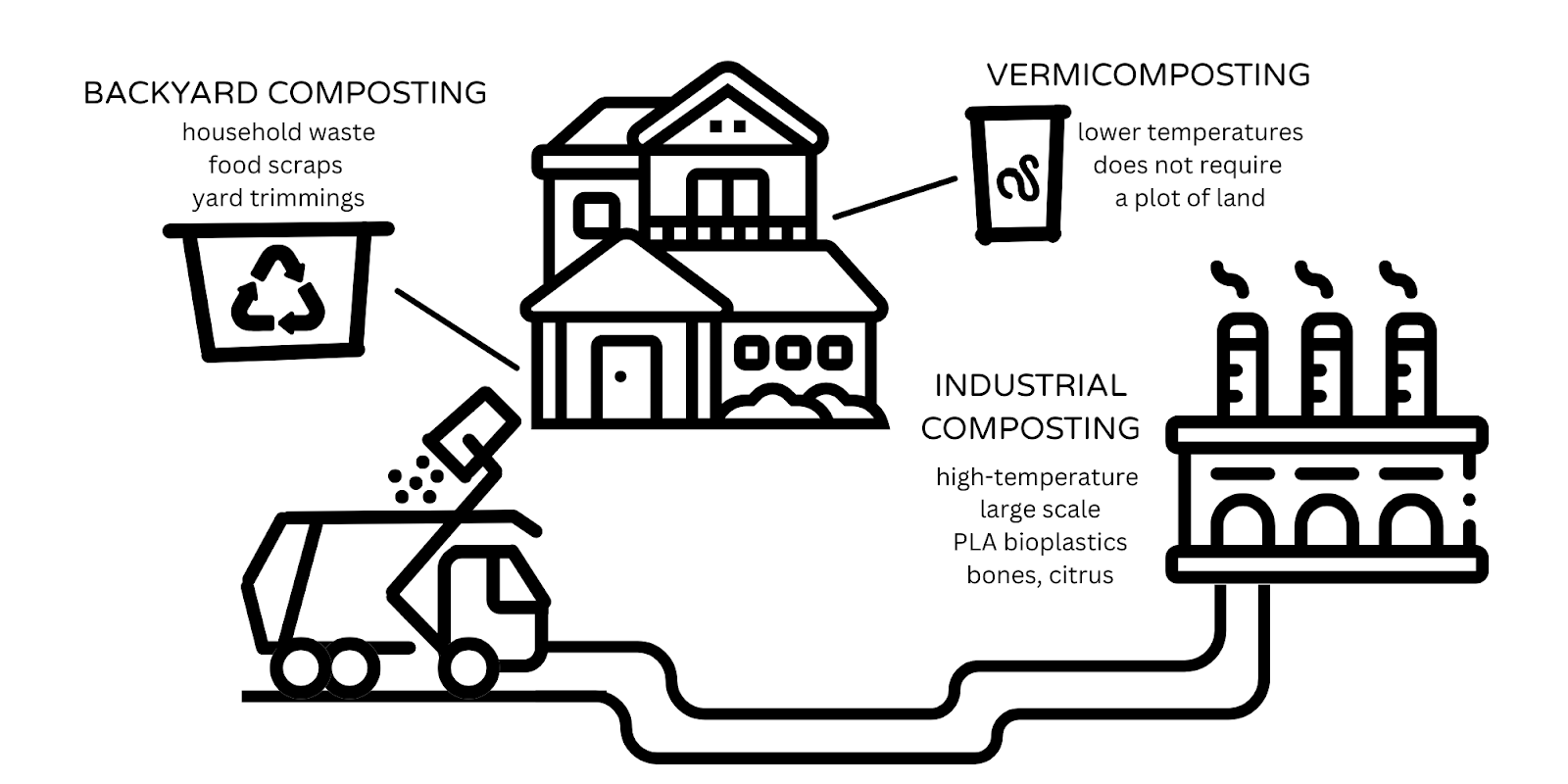
Determining the appropriate method of composting is often determined by the given material’s type and volume. Regardless, ensure your compost is always free of contaminants such as herbicides, non-compostable packaging, and produce stickers.
Bioplastic formulations come in various forms depending on their applications and demand for compostability. PLA is the most common bioplastic in the food service industry, being primarily rated for industrial composting. It is designed to break down in large-scale, thermophilic systems. Certified, compostable bioplastics are engineered to fully decompose within 12 weeks at a commercial facility.
When working properly, industrial composting helps to collect, process, and recycle organic materials that would have been otherwise landfilled or incinerated, throwing away valuable carbon and nutrients.
Oligomaster has worked to develop and market a multitude of products that surpass its competition in quality and compostability. We look at the full scope of the supply chain and lifecycle when developing a product. Our commercialized formulations in the bioplastic space are custom for varying levels of degradation and performance, such as by implementing natural additives allows for the development of new materials that can be disposed of in home compost and vermicompost settings. Going a step further, design space AI software helps us manage and database our formulations to balance performance, shelf life, and end-of-life parameters.
Facilities are accepting bioplastics, though there are inevitably still some hurdles to ensuring the materials’ end-of-life is fully optimized for the new supply chain, especially with the risk of contamination from chemicals and misinformation on what is compostable. British Columbia has implemented a ban on all single-use plastics, including compostable bioplastics. Policy makers have promised to reverse the ban once provincial infrastructure allows for easy and reliable disposal, to realign itself with federal legislation. There may be more minutiae between municipalities, so check your local facility’s criteria.
A circular mindset goes beyond a circular economy: understanding the fundamentals of sustainability allows us to regenerate value out of a material without additional input. Whether at home, in the community, or in a large facility, composting supports a green economy. We harvest and revitalize a material’s building blocks to support organic infrastructure. Compost enriches the soil, promotes climate change resistance, supports plant growth, creates green jobs, and allows for the continuous use of our world’s precious resources.