Artificial Intelligence in Advanced Manufacturing
How AI-driven prediction, optimization, and generative design are transforming sustainable manufacturing practices.
Also on LinkedIn
Artificial Intelligence in Advanced Manufacturing
Written by Lubhan Cherwoo
The Industrial Revolution led humanity to duplicate its own work through machines, marking a turning point in human innovation. Since the inception of manufacturing, we have sought to replicate human intelligence in machines. Artificial intelligence (AI) is the next big step in the evolution of manufacturing with technology that learns from experience, refines itself and helps in production with higher efficiency. Machines are designed not only to build but to think, predict and improve. AI plays a pivotal role in supporting human intelligence and is reshaping our relationship with the economy. It plays a major role in how we distribute knowledge, design and produce goods, and can be a tool of mitigation and adaptation in a world where sustainability and productivity can be competing factors.
Adaptation and mitigation in manufacturing
To make any manufacturing process truly sustainable, it must adapt to change while mitigating its footprint. Globally, the manufacturing industry has been the driving force for economic growth, often at the expense of its environmental footprint. According to the World Economic Forum, an estimated $40 trillion worth waste material is generated by human society out of which 40% is generated from the manufacturing industry alone Mehta, 2024. With tightening global regulations and fluctuating material supply chain, industries face the critical challenge to adapt with proactive redesigning of manufacturing processes. This presents an opportunity for AI-enabled technological advancement.
Adaptation in manufacturing means rethinking production strategies and redesigning workflows in accordance with climate and market pressures. On the other side, mitigation means minimizing harm within existing setups by optimizing process design to use fewer resources and reduce energy consumption.
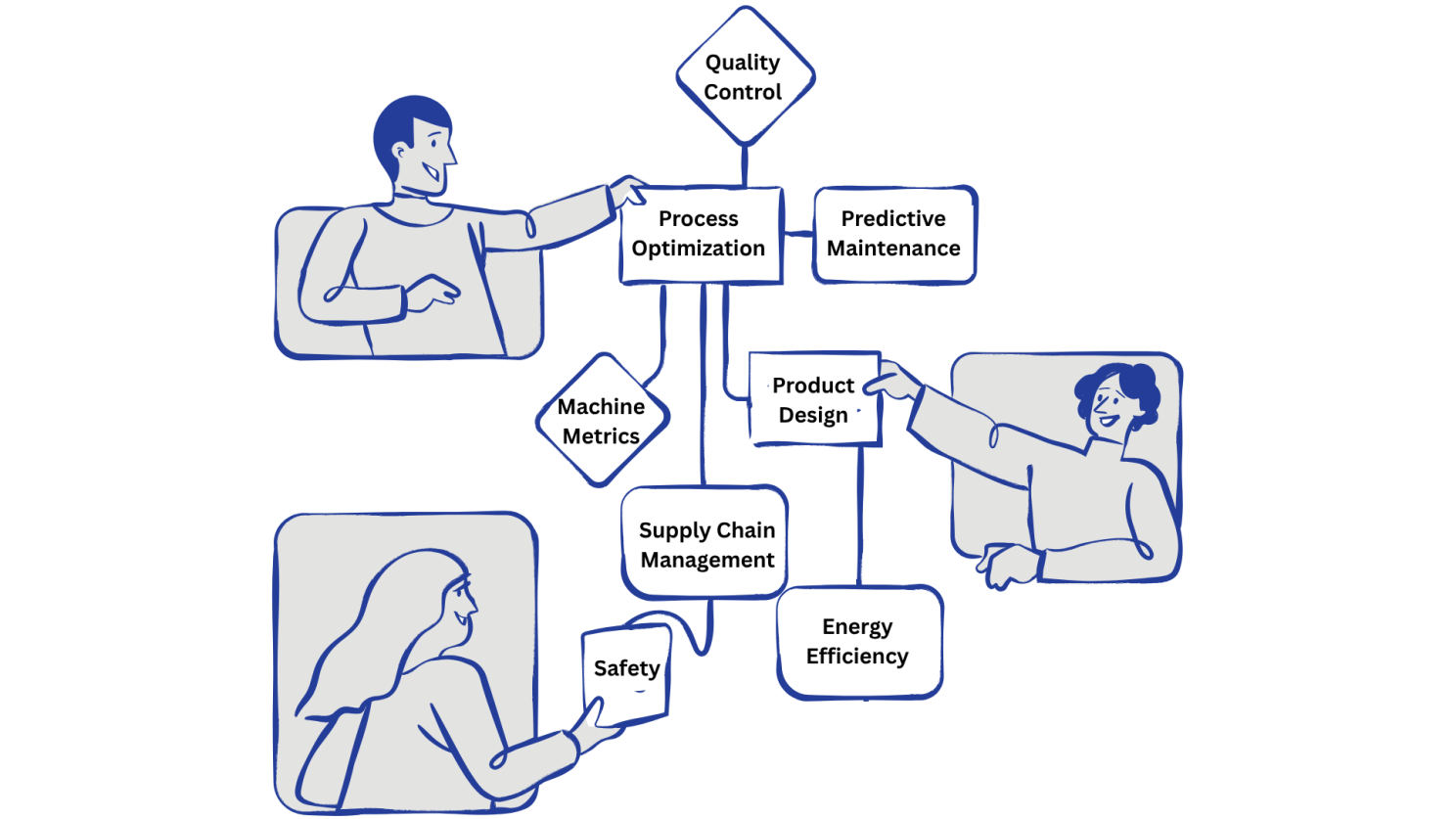
AI helps in both stages: a predictive algorithm can enable new design strategies based on market response, resource procurement or production costs. AI-based optimization algorithms such as Oligomaster’s bespoke DesignerSpace™ can help in selecting process conditions, leading to lower energy utilization and a smaller footprint. A popular example would be the shift from single-use plastic bags to biodegradable bags, where the manufacturing process flow, raw material costs, and carbon emissions are each optimized based on product performance and biodegradation behaviours. Though AI integration may require a change in mindset, after eventual successful implementation, it leads to simplified practices that enable sustainable manufacturing strategies.
How AI transforms advanced manufacturing practices
Source
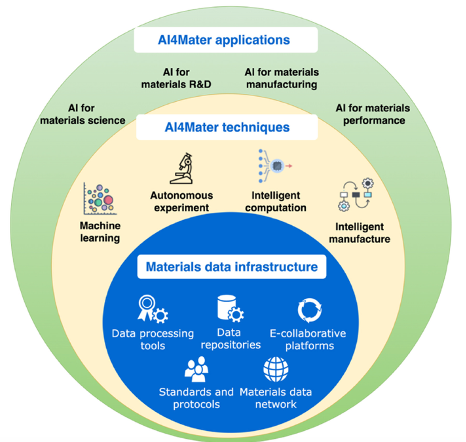
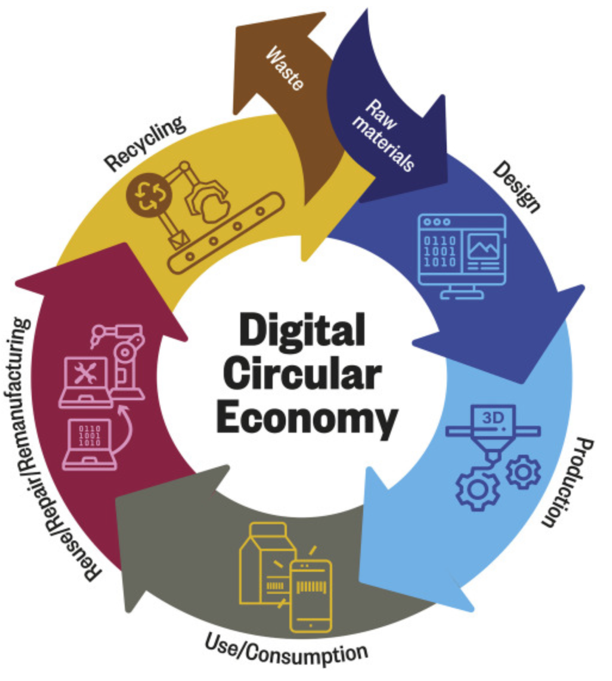
Advanced manufacturing strategies involve high accuracy and precision, which is generally facilitated through human knowledge and process design. Today, the difference lies in foresight. AI-enabled systems can analyze thousands of existing data points from production lines, sensors, supply networks and material characteristics to predict production failures, process deviations, product performance, and optimize process conditions. Predictive maintenance approaches could reduce operational costs, decrease downtime, and increase productivity, leading to improved manufacturing processes Mallioris et al., 2024. This in-depth insight into the manufacturing process helps reduce extensive resource utilization, improve downtime prediction, conserve energy, and minimize material wastage. Traditional practices, when replaced by predictive maintenance, enable proactive optimization of the process. Small vibrational or temperature fluctuations may go unnoticed, but with integrated AI systems, these lead to automated inspections and calibrations, exemplifying AI’s role in the circular economy Raut et al., 2025.
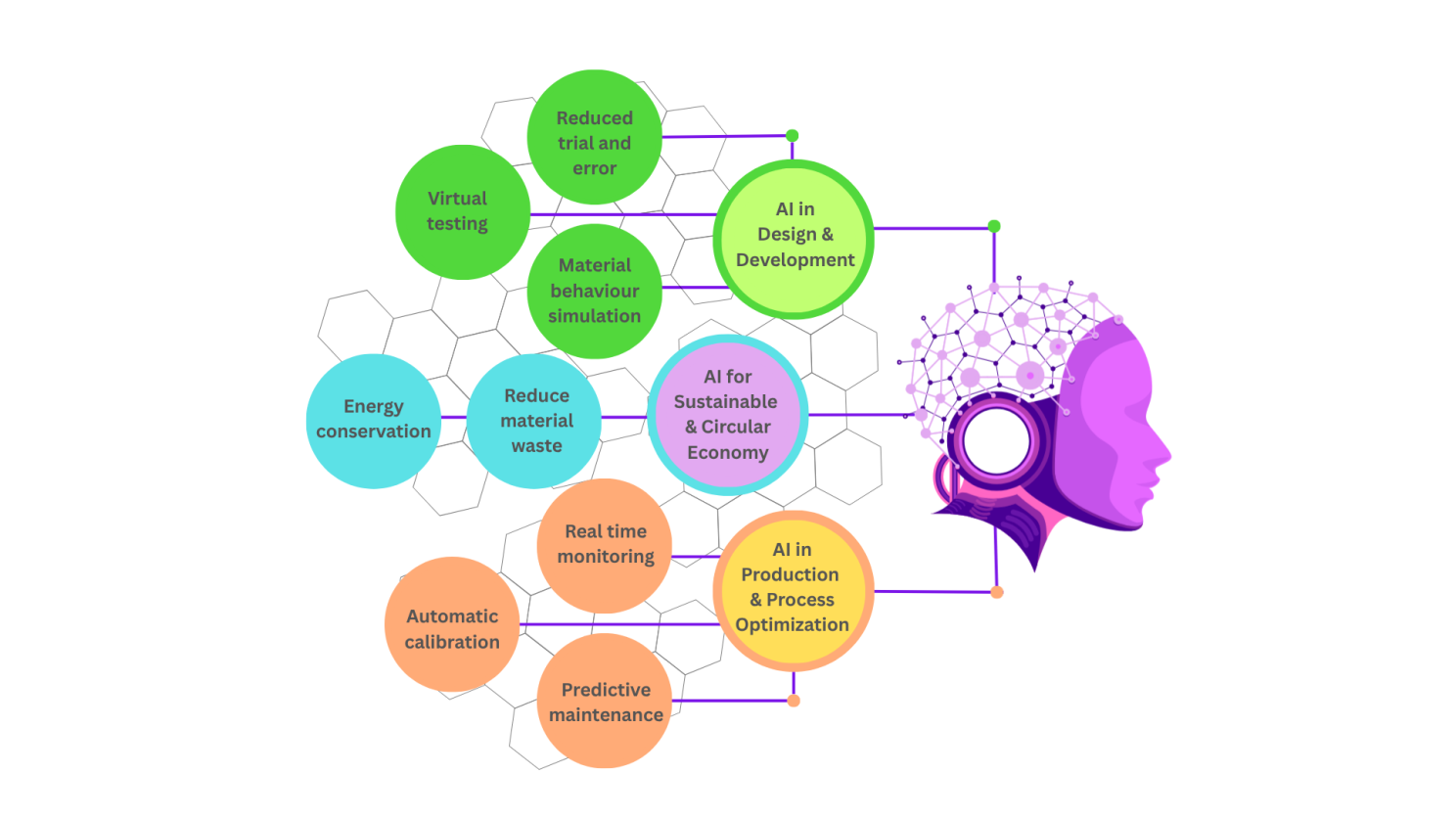
AI like the DesignerSpace™ can also be applied at the earliest stages of product development by simulating material behaviour and product performance, allowing researchers and industrialists to virtually test product formulations before beginning real-world modelling. AI-driven generative designs can accelerate research and development timelines by drastically reducing waste from trial-and-error experimentation, enabling a balance between product properties, production cost and environmental impact of the process. Multiple studies on material informatics detail comprehensive discussions on how AI can be used in transforming the design and analysis phases of product development. Research has brought together key digital platforms, material databases and computational tools used for data-driven material discovery. These tools have enabled property prediction, morphological optimization, and the design of new products. However, factors like data sparsity, material performance standardization and integration of multiscale models have presented significant limitations in large-scale implementation of AI technology Zivic et al., 2025.
As the world shifts towards net-zero targets, AI-enabled prediction and optimization tools make sustainable product design not only possible but also hold practical importance.
Oligomaster’s vision: Sustainable and intelligent industries
Oligomaster is focused on advanced innovation with sustainable industrial practices to transform manufacturing strategies. We work on transforming, conceptualizing, and testing materials to bring products to the market. Our AI-driven approach shortens innovation cycles with a balance of sustainability in every manufacturing stage. We collaborate with industry and research institutions to help bridge the gap between performance and innovation by combining world-class laboratories, academic partnerships and industry connections.
Source
AI is not a distant concept: it is shaping how we innovate, design, produce, and sustain products that define modern life. Manufacturing has always been about the transformation of tools, materials, and design possibilities. With AI, we now transform intelligence into tools that enable technologies that make manufacturing smarter and more sustainable. Oligomaster believes that the future of production will not be defined by machines alone, but by the harmony between human creativity and artificial intelligence. A partnership that turns adaptation into opportunity.